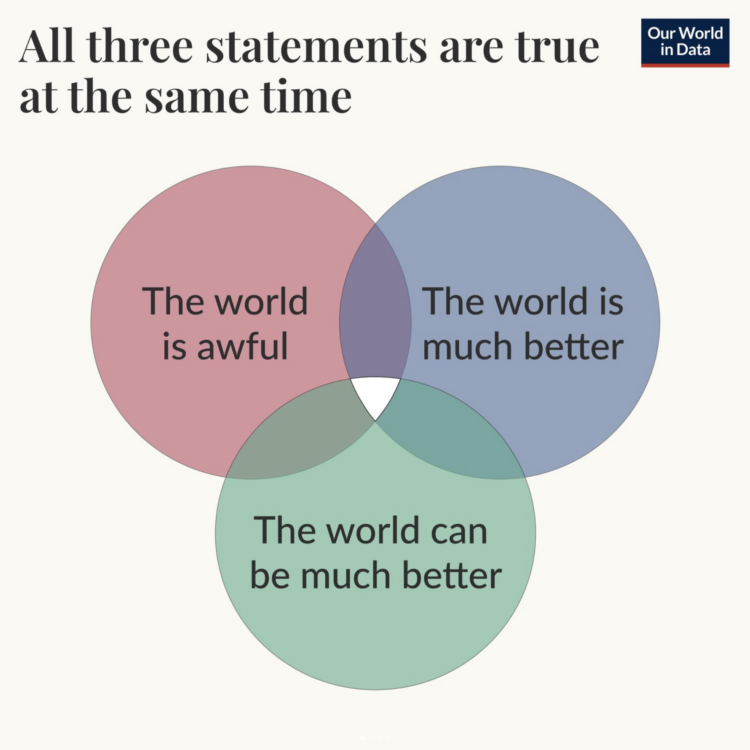
[Via Flowing Data]
[Via Flowing Data]
I’ve been meaning to talk about this article for months, because it infuriates me. I spent a total of 22 years working in the banking industry: 14 at a big six bank, and 8 more at a smaller challenger bank (which railed against the kind of stuff described below). Based on what I saw working at that big bank, nothing in this article surprises me.
From the CBC:
Marketplace has spoken confidentially to current and former bank employees from all the big banks: TD, RBC, BMO, Scotiabank and CIBC. CBC is concealing their identities because they fear professional repercussions. All expressed similar concerns about enormous sales pressure they say leads to potentially costly or otherwise dangerous financial products being pushed on customers.
“I had to mislead customers into getting products that they didn’t need, to reach my sales target,” said a recent BMO employee.
“It’s not a customer service … environment,” a former Scotiabank employee said. “We’re there to sell — and make money for the bank.”
While I never worked in a branch, it was common knowledge that this happened. Branch staff had monthly sales quotas. I personally witnessed — as a customer long after I left that bank, mind you, not as an employee — staff in a different big six bank offering products to a customer that they obviously did not need, not because they wanted to, but because the system prompted them to and they knew they’d be in trouble if they didn’t ask.
They will push credit products and other revenue-generating products in order to meet sales quotas, vs. giving advice which would benefit the customer. From the same article:
In a second test, Marketplace sent a colleague wearing hidden cameras to meet with financial advisors at the big five banks.
She posed as a customer with a $50,000 inheritance coming soon and wanted financial advice. If asked, she said she also had a $350,000 mortgage and $17,000 in credit card debt.
None of the advisors asked about existing debt, instead recommending that our tester invest the full $50,000 in products like GICs and mutual funds, which help bank employees hit their sales targets.
When our tester raised the credit card debt herself, only BMO and CIBC clearly recommended that she use part of the supposed inheritance to pay it off in full.
Anyone with a basic knowledge of budgeting and money management would tell you to pay down high-interest debt before investing. But they get away with this predatory bullshit because customers assume that bank branch employees have a fiduciary duty to help them. THEY 👏 DO 👏 NOT 👏.
In one recording, a manager tells Jeraline that in order to make more sales, she should remember that she does not work in customer service.
“We are investment advisors,” he says. “You have to have a bit of aggression.”
Unlike registered financial advisers, financial advisors (spelled with an “o”) at banks have no fiduciary requirement to their customers.
I say this to everyone who tells me about their investments at their bank. 9 times out of 10 it’s some mediocre bank-owned mutual fund which was recommended not because it’s the best option for the customer, but because it makes the bank the most money. Look at this list of the largest mutual funds in Canada, or this table from Morningstar.ca showing the most popular funds on their site last year.
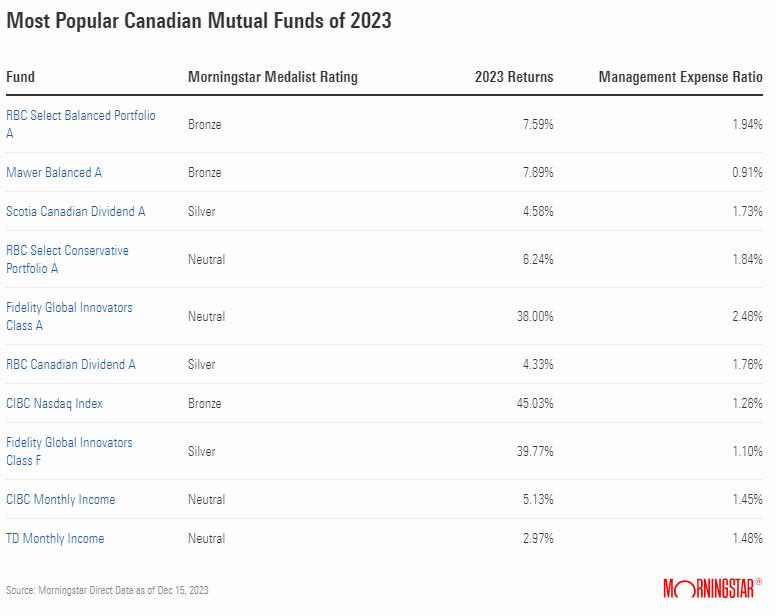
7 of those 10 funds are from big banks, despite their largely mediocre performance. In fact, by the time you subtract the MER, 4 of those 7 big bank mutual funds earned less last year than my everyday bank account. The only reason these funds grew so big is because bank staff recommend them regardless of their performance or suitability to the customer.
Most people are surprised when I tell them the bank employee who sold them a high-fee mutual fund owes them no fiduciary duty. They shouldn’t be. Those banks are designed to maximize their own profits at the expense of their customers, in spite of their spokespeople’s protestations or what their multimillion-dollar marketing campaigns tell you. I didn’t see that — or didn’t want to see it — until I stopped working at one…and I have a Commerce degree and an MBA, plus decades of hands-on experience. My heart breaks for the people who get taken advantage of day in and day out by a predatory oligopoly.
Fourteen years ago at TIFF I saw a movie called Leslie, My Name Is Evil (imdb | rotten tomatoes), a heavily-stylized story about Leslie Van Houten, one of the Manson Family cult murderers. In writing this I just noticed that at some point the title of the film had been changed to Manson, My Name Is Evil? Anyway, I’d kind of forgotten about the film since then, until earlier this week when I read that Van Houten had been released from prison after 53 years.
Weird timing for this much Manson-esque news, as we’d also just watched the “Under The Sea” episode of the latest season of Black Mirror, in which a cult presumably patterned after the Manson Family plays a central role. Another funny coincidence: Tiio Horn is in Leslie/Manson, My Name Is Evil, and also in The Trotsky, which we just randomly happened to watch with a friend on Thursday night.
That latest season of Black Mirror, by the way, was mostly excellent, especially the one featuring Podrick Payne.
I am watching Chernobyl (imdb | rotten tomatoes) again, probably because Russian troops decided to fire huge guns at a Ukranian nuclear facility several times larger than the afore-mentioned one whose reactor exploded in 1986. Great idea, Russia. Why not flirt with global catastrophe whilst carrying out an illegal invasion?
I must say, while re-watching it, a line in the script from Scherbina struck me, given the current situation:
“This is what has always set our people apart. A thousand years of sacrifice in our veins. And every generation must know its own suffering. I spit on the people who did this, and I curse the price I have to pay. But I’m making my peace with it, now you make yours…because it must be done.”

It’s kind of hard to believe it’s been twenty years. Really intense, indelible memories have a way of shortening time, I guess.
I still remember my colleague Dom standing up on his chair and telling us planes had hit the World Trade Center. I remember there was no TV in the office, and all the news sites we visited were overloaded so we ended up using Ananova, and going downstairs to the Radio Shack to watch the news through the window. I remember everyone going home early when the banks evacuated the big towers downtown. I remember stopping at the McDonald’s at Bloor & Avenue for some lunch, back when TIFF was centered in and around Yorkville, and hearing several American film industry people on their phones trying to figure out how to get home. I remember meeting my friend Jane on the patio at Hemingway’s (I was there yesterday for the first time in years, weirdly enough) that night as we tried to reconcile what had happened, gazing at it through the bottom of pint glasses. I even remember going to a Sigur Ros concert at Massey Hall nine days later (documented here, in what would end up being my first blog post, before I even knew the word blog I think) and everything still felt fuzzy and surreal.
It was an event born from decades of tragedy and violence, and begat decades more. It seemed trite and overblown to say it at the time, but with so many years of hindsight it really does seem one of the defining moments of history as I know it.

I keep trying to write something, but I keep stumbling and giving up. I think about sharing the same thing on Instagram as everyone else, but I feel like I’m just noise at this point. I mean, how do you make your brain reconcile something like this?
I obviously didn’t experience this myself. I didn’t lose kids this way. I don’t have kids at all, and I imagine every parent who never asked themselves before how it would have felt to lose their child — or even lose their child — this way, must be asking themselves this week. Even with all that buffer and privilege, it still overwhelms my brain and brings me to tears.
This is our history. This is our legacy to face. These 215 bodies, still trapped in the earth we stole from them. The thousands and thousands of dead and abused. Generations of trauma. This is Canada. South Africa took tips on how to implement Apartheid from us. This has to be faced and reckoned with. Others have done the work for us to tell us how. We need national acceptance and political will.
I’m saying nothing new or insightful here. I’m just processing into a keyboard.
Tomorrow I’ll attend this march, and try to process some more, and try to help where I can.

True to form (which is to say, consistently formless and unpredictable) the Ontario government on Friday announced restaurants and bars could open their patios. With no warning.
First of all, in my opinion, we shouldn’t be opening up anything right now. There were 1,791 new COVID-19 cases in Ontario yesterday, and 18 people died. There’s a “growing consensus among medical experts that the province has entered a third wave of COVID-19 cases” in Ontario. (source) I get that businesses, especially small businesses, want to re-open. But re-opening early just prolongs the pain of this half-measure. Is it really worth it?
Second, if you’re going to make this decision, you don’t drop it on all these beleaguered business owners with less than 24 hours notice.
I don’t know why I expected anything else from this clown car of a government who is clearly prioritizing the economy over lives — as if the economy doesn’t count on alive-ish people.
Meanwhile, in Canada’s New Zealand:


I should have more to say about the US election. I just don’t have it in me. And, truth be told, ever since I read this Atlantic article (published pre-election) about how Trump might try to gin up enough trouble to keep himself in power, I’m probably more nervous about his seemingly-clumsy protests and machinations than most.
I am just gonna leave this here though:


Whilst they’re taking a bit of a pause right now, this account has been one of the few bright spots in my feeds during this overall trash bag of a year.
.:.
Cover photo by Nijwam Swargiary on Unsplash
 Skirl | Dan Dickinson